Hiring a contractor in Jamaica can feel stressful when you do not know what a project should cost. You want quality work, fair pricing, honest communication, and someone who respects your property.
Pricing can become even more difficult when you are overseas. You may need to maintain a Jamaican property, complete repairs, or coordinate work for a family member.
Fortunately, you can reduce the uncertainty. Written quotes, careful comparisons, clear payment terms, and proper records can help protect your budget.
This guide explains how to hire contractors in Jamaica, compare quotes, manage project changes, and avoid unexpected charges. It also shows how ConnectToPros.com can help you evaluate service providers before making a decision.
1. Why Contractor Prices Can Vary
A higher quote does not always mean someone is overcharging you. Contractor prices can vary for several reasonable reasons.
The project’s size and complexity will affect the cost. A simple repair will usually require less labour than a complete renovation.
Travel distance can also affect pricing. A contractor may include transportation, fuel, delivery, or accommodation when working outside their usual service area.
Material availability matters too. Prices can change because of shipping expenses, import costs, exchange rates, shortages, or differences between suppliers.
Project access can also increase labour time. A repair inside a crowded space may require more preparation than an easily accessible job.
Urgent work may cost more, especially when it requires evening, weekend, or emergency service. Ask whether the quote includes an emergency or after-hours fee.
Contractors may also use different materials and methods. One quote may include premium materials, while another uses more affordable alternatives.
These differences make it important to compare the complete scope, not only the final price.
2. Compare Like-for-Like Contractor Quotes
When possible, request quotes from two or three contractors who serve your area. Comparing several options gives you a clearer picture of the expected cost.
However, the lowest price is not automatically the best value. A low quote may exclude preparation, materials, transportation, cleanup, or finishing work.
An expensive quote is not automatically unfair either. It may include better materials, more experienced workers, additional preparation, or a stronger warranty.
Ask each contractor to price the same project description. This makes your comparison more accurate.
When comparing home repair services in Jamaica, review the following information:
- The work included in the quote
- The work specifically excluded
- Labour charges
- Material costs
- Material brands and quantities
- Transportation and delivery fees
- Cleanup and disposal costs
- Taxes or processing fees
- Deposit requirements
- Payment schedule
- Estimated completion time
- Warranty or workmanship terms
If one quote looks unusually high or low, ask the contractor to explain the difference. A professional should be willing to discuss the scope and pricing.
You are not accusing anyone by asking questions. You are making an informed financial decision.
3. Ask for a Detailed Price Breakdown
A detailed price breakdown helps you understand how the contractor calculated the quote. It also makes different quotes easier to compare.
Ask the contractor to separate labour, materials, transportation, equipment rental, delivery, disposal, and other charges.
You should also confirm who will purchase the materials. Some contractors include materials in their price, while others quote labour only.
If the contractor will buy the materials, ask for the proposed brands, quantities, and quality level. You should understand what your money will purchase.
If you will buy the materials, ask for a written list. Confirm the measurements and quantities before placing the order.
Some projects contain allowances for items that have not been selected. For example, a bathroom quotation may include an estimated amount for tiles or fixtures.
Ask whether the quote contains any allowances. If your final selection costs more than the allowance, you may need to pay the difference.
Treat unclear pricing as a warning sign. Ask for clarification before paying a deposit or approving the work.
4. Use a Written Quote and Agreement
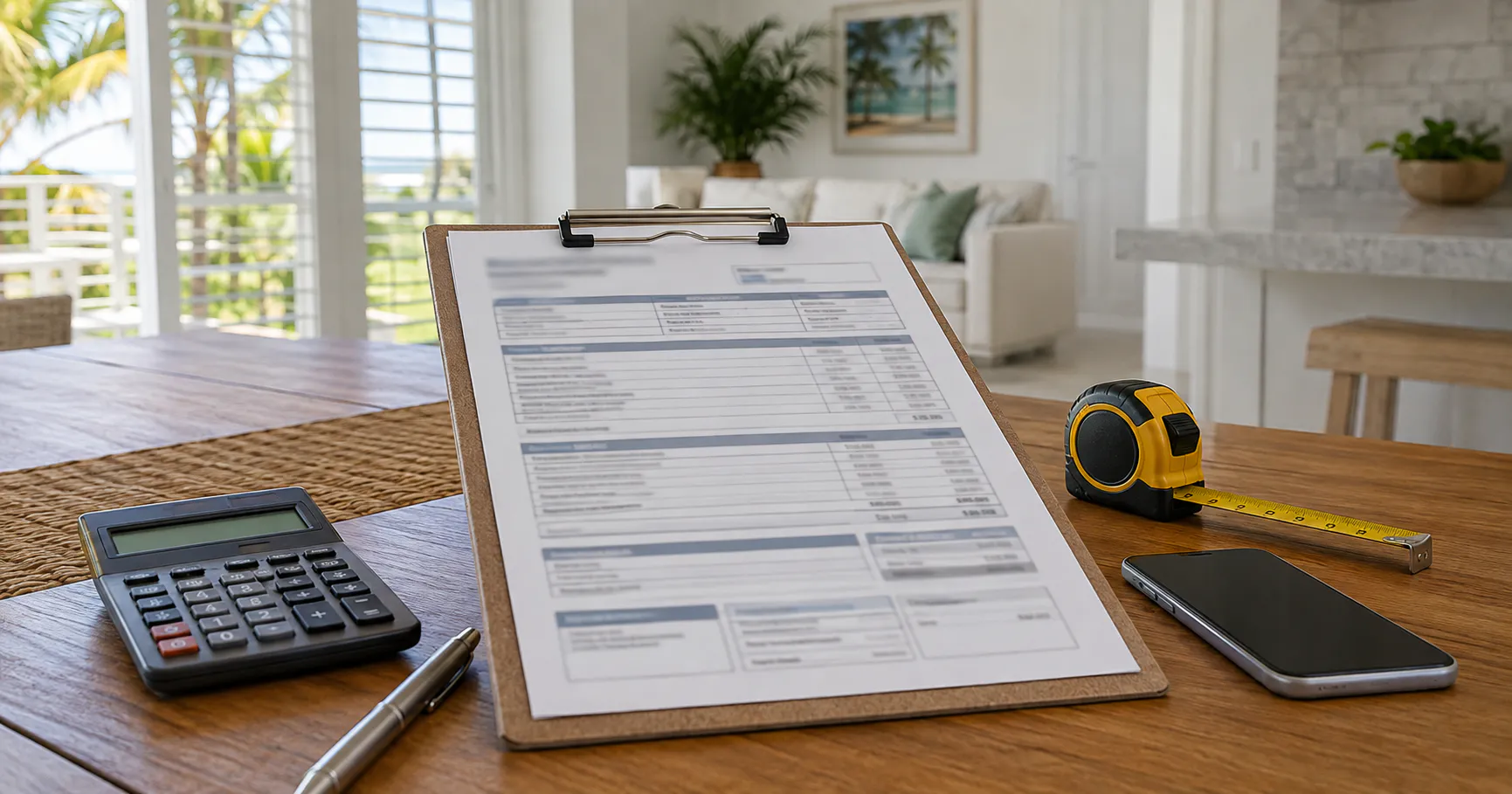
A written quote creates a clear starting point for the project. It gives you and the contractor a shared record of the expected work and price.
However, a quote does not always guarantee that the final price will never change. Hidden damage, material substitutions, or customer-requested additions may increase the cost.
The quote should explain how long the price remains valid. This is important because material prices may change between the quotation and project start dates.
For larger projects, use a written agreement that covers the scope, payments, schedule, responsibilities, changes, and dispute process.
What Should a Contractor’s Quote Include?
Before approving a quote, check that it identifies:
- The contractor and customer
- The project address
- The contractor’s contact information
- A detailed description of the work
- Materials, brands, and quantities where known
- The person responsible for purchasing materials
- Labour charges
- Transportation and delivery fees
- Cleanup and disposal responsibilities
- Taxes and additional charges
- The deposit and payment schedule
- Estimated start and completion dates
- Work that is not included
- Warranty or workmanship terms
- The process for approving additional work
- The quote’s expiration date
Read everything before signing. Ask the contractor to correct vague, missing, or inaccurate information.
Keep a copy of the signed agreement where you can access it easily.
5. Control Additional Work With Written Change Orders
Unexpected problems sometimes appear after work begins. A contractor may remove damaged material and discover a deeper issue.
You may also decide to change the design, upgrade a fixture, or add another task.
These changes can increase the project cost. That does not necessarily mean the contractor is overcharging you.
The important issue is how the change is communicated and approved.
Ask the contractor to provide a written change order before completing additional work. The change order should explain:
- The new or revised work
- Why the change is necessary
- The additional materials required
- The additional labour cost
- Any effect on the completion date
- The new total project price
Review and approve the change in writing whenever possible. Do not depend only on a phone call or casual conversation.
A contractor should not surprise you with major additional charges at the end of the project.
6. Use a Clear Payment Schedule
Avoid paying the entire project cost before work begins. A staged payment schedule can protect both you and the contractor.
The contractor may need a deposit to purchase materials, reserve workers, or schedule equipment. The amount should be explained in the quote or agreement.
Additional payments can be connected to specific milestones. For example, payment may become due after materials arrive or a project stage is completed.
Before making a milestone payment, confirm that the related work has been completed. Take photographs and document any unfinished or unsatisfactory items.
The final payment should follow the terms of your agreement. Inspect the completed work and discuss any outstanding issues before closing the project.
Avoid making undocumented cash payments. If you pay with cash, request a signed receipt immediately.
Jamaica’s Consumer Affairs Commission advises customers to obtain valid receipts for goods and services. A receipt should include the vendor, date, description, amount paid, and additional fees.
Request a receipt for every deposit, material purchase, milestone payment, and final payment.
Store your receipts with the quote, agreement, photographs, change orders, and messages. These records can be valuable if a disagreement occurs.
7. Review the Contractor’s Work and Reputation
Price is important, but it should not be your only consideration.
Review photographs of previous projects that are similar to yours. Before-and-after images can help you evaluate the contractor’s experience and finishing quality.
Read several customer reviews instead of relying on one rating. Look for consistent comments about communication, punctuality, pricing, workmanship, and problem resolution.
Ask the contractor for references when appropriate. Contacting a recent customer can help you understand what the working experience was like.
You can also ask whether the contractor has completed similar work in your parish or community.
For specialised projects, confirm any relevant qualifications, licences, insurance, certifications, or permits. Requirements can vary according to the trade and project.
Do not assume that a social media following proves professional ability. Examine the contractor’s actual work, documentation, and customer history.
8. Watch for Contractor Pricing Warning Signs
Not every pricing problem is obvious. Pay attention to behaviour that makes the project difficult to understand or control.
Possible warning signs include:
- Refusing to provide a written quote
- Pressuring you to decide immediately
- Requesting full payment before work begins
- Providing a price without inspecting or understanding the project
- Giving vague descriptions of materials
- Refusing to explain additional fees
- Changing the price repeatedly without documentation
- Asking for payments without receipts
- Starting additional work without approval
- Avoiding questions about previous projects
- Providing inconsistent contact or business information
- Offering a price that seems unrealistically low
One warning sign does not automatically prove dishonesty. However, several warning signs should encourage you to pause and investigate further.
Trust your judgement. It is easier to delay a project than to recover money after a serious disagreement.
9. Protect Yourself When Hiring From Overseas
Jamaicans living overseas often arrange repairs, maintenance, and construction for properties back home.
Managing the project remotely can create additional uncertainty. You may not be able to inspect materials or monitor daily progress.
Start by providing a detailed project description. Include photographs, measurements, location information, and your desired outcome.
Ask the contractor to send dated photographs or videos before work begins. Request additional updates at agreed project milestones.
If possible, appoint a trusted person in Jamaica to inspect the property. That person can confirm deliveries, review progress, and identify concerns.
Do not approve extra work based only on a brief voice note. Request a written explanation and updated price.
Keep important communication in one organised location. Save copies of quotes, messages, payment confirmations, photographs, and receipts.
Clear documentation does not show distrust. It creates accountability for everyone involved.
10. How ConnectToPros Helps You Compare Contractors
ConnectToPros.com allows customers to search for service providers by industry, location, service, and parish.
You can review provider profiles, ratings, services, photographs, price ranges, and years of experience. You can also request quotes and message providers before hiring.
This makes it easier to compare several professionals instead of depending on the first person you find.
ConnectToPros reviews provider applications before approving profiles. Providers seeking full vetting must submit relevant business documentation for verification.
However, platform approval should not replace your own research. Confirm the contractor’s experience, qualifications, references, availability, and project terms before hiring.
Reviews can provide helpful information about previous customer experiences. Look for patterns and compare them with the provider’s work samples and quote.
Use the messaging and quote features to discuss the project clearly. Save copies of important agreements and payment records for your own files.
ConnectToPros can support your decision, but you remain responsible for selecting the provider who best matches your project.
Final Thoughts
Hiring a contractor in Jamaica does not have to depend on guesswork. Clear information can help you control costs and avoid unnecessary disputes.
Compare like-for-like quotes, request a detailed breakdown, confirm materials, and use a written agreement. Document additional work through change orders and collect a receipt for every payment.
If you are managing the project from overseas, request regular updates and keep complete records. Consider asking someone you trust to inspect important stages.
Many Jamaican contractors are skilled, dependable, and committed to delivering good work. A careful hiring process helps you identify those professionals.
When you are ready to hire contractors in Jamaica, ConnectToPros.com can help you explore providers, compare profiles, request quotes, and communicate before committing.
The goal is not simply to choose the lowest price. It is to choose clear terms, suitable experience, dependable service, and lasting value.