A new wall crack can make you imagine expensive home repairs before you finish your morning coffee. However, not every crack means your home is preparing to collapse.
Homes move slightly as materials expand, shrink, settle, and respond to weather. Small surface cracks can develop without indicating serious structural damage. Some cracks and other structural warning signs in Jamaica deserve professional attention. Their location, direction, size, and growth can reveal important information.
Sticking doors, uneven floors, and gaps around windows can provide additional clues. When several warning signs appear together, you should investigate further. You do not need to become a building expert overnight. You simply need to recognize changes and contact the appropriate professional.
Not Every Wall Crack Tells the Same Story
A thin crack in paint or plaster may be cosmetic. It can appear as materials dry, expand, or experience normal movement. These cracks are often narrow and remain unchanged over time. You may find them around ceiling joints, corners, or repaired surfaces. A crack that keeps widening deserves more attention. You should also watch cracks that return after repeated patching.
Diagonal cracks can sometimes suggest movement around doors, windows, or foundations. Stair-step cracks along blocks may require a professional assessment. Horizontal cracks can also be concerning, especially when they appear wide or affect an exterior wall. Pressure or structural movement may be involved. Do not judge a crack by direction alone. A professional must consider its size, location, surrounding materials, and development.
Look for crumbling concrete, exposed reinforcement, or moisture around the crack. These conditions may indicate a larger repair need. You should also check the same area outside your home. A crack appearing on both sides deserves careful examination. Avoid filling every crack immediately. Covering it too quickly can hide useful evidence that helps an expert understand its cause.
Keep an Eye on Changing Cracks
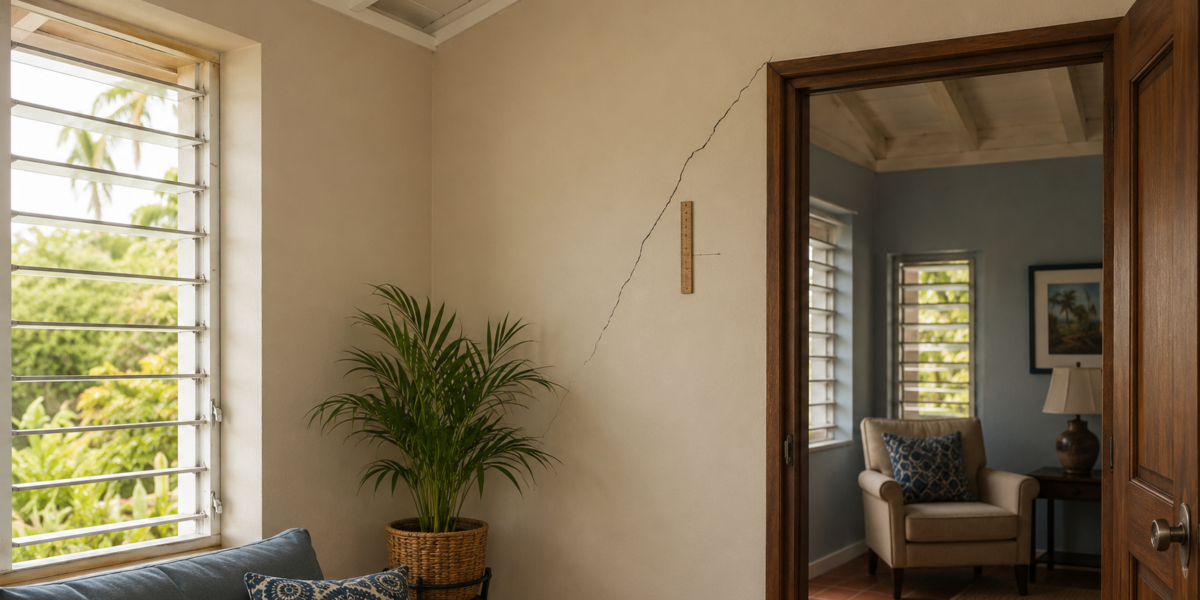
You can monitor a crack without poking it repeatedly. Start by taking a clear photograph with the date recorded. Place a ruler beside the crack for scale. This makes future comparisons easier and reduces guesswork. Check the area every few weeks. Look for changes in width, length, direction, colour, or nearby damage.
You can lightly mark the crack’s endpoint with a pencil. If it extends beyond the mark, movement may still be happening. Never drill into the crack to explore it. You could damage wiring, plumbing, or structural materials hidden behind the surface.
Keep a short record of nearby events. Heavy rain, construction work, earthquakes, or plumbing leaks may provide useful context. In Jamaica, intense rain can reveal drainage and moisture problems around buildings. Water may soften surrounding soil or enter damaged surfaces.
Heat can also cause some building materials to expand. Daily temperature changes may create movement between different materials. Monitoring does not replace professional advice. It simply gives your contractor or engineer more useful information during an inspection.
Do not monitor a crack instead of seeking help when walls lean, floors sag, or movement happens quickly. Leave unsafe areas and request an urgent professional assessment.
When Doors and Windows Start Misbehaving
A stubborn door can feel like it developed a personal disagreement with you. However, the frame may have shifted slightly. Wooden doors can swell when they absorb moisture. This issue may become more noticeable during humid or rainy periods.
A carpenter can inspect the door, hinges, frame, and surrounding woodwork. The solution may involve adjustment, repair, or replacement. Loose hinges can also make a door scrape the floor. Tightening suitable screws may correct the problem when no damage exists. However, several sticking doors can suggest movement beyond one frame. You should investigate when doors suddenly change throughout the home.
Look for uneven gaps around each door. One side may appear wider, while another side rubs against the frame. Windows can provide similar clues. They may become difficult to open, close unevenly, or develop new spaces around their frames. Cracks extending from door or window corners deserve attention. These areas naturally concentrate stress when a building moves.
A carpenter can solve problems involving the door itself. A mason, contractor, or structural engineer may handle surrounding structural concerns.
Moisture Can Create More Than Ugly Stains
Water can weaken finishes and damage materials over time. It can also create cracks that return after cosmetic repairs. You may notice peeling paint, dark patches, swollen wood, or a musty smell. These signs can point toward hidden moisture. Check whether the crack appears near plumbing, bathrooms, roofs, windows, or exterior walls. The source may not be directly beside it.
Rainwater can enter through damaged roofing or poorly sealed openings. It may travel before becoming visible inside your home. Drainage around the property also matters. Water collecting near the foundation can contribute to movement and dampness. Do not repaint a wet wall and hope for the best. That approach gives the problem a fresh outfit without solving it.
The moisture source should be identified first. Repairs can then address damaged plaster, blockwork, concrete, wood, or paint. A mason may repair damaged walls or concrete surfaces. A contractor can coordinate several trades when the problem affects multiple areas.
If structural movement is suspected, a structural engineer should evaluate the building. That assessment can guide safer and more effective repairs.
Which Professional Should You Call?
Choosing the right professional can feel confusing because several trades may work around walls, doors, and structures. Their responsibilities are different. A carpenter generally handles wooden doors, frames, cabinets, trim, and related fittings. They can repair swelling, alignment, and damaged wood.
A mason works with blocks, bricks, concrete, plaster, and mortar. They may repair surface cracks or rebuild damaged sections. A contractor can manage larger home repairs involving several professionals. They may organize materials, schedules, labour, and different stages of work. A structural engineer evaluates building movement, stability, and safety. You may need one when cracks suggest structural or foundation trouble.
You should consider a structural engineer when cracks widen quickly. Sagging floors, leaning walls, or major separation also deserve expert assessment. If you are uncertain, begin by clearly describing every warning sign. A professional can advise whether another specialist should join the inspection.
Searching for home repair services in Jamaica can produce many choices. Focus on professionals with experience related to your specific problem. Ask whether the professional has handled similar cracks, door problems, or structural concerns. Relevant experience matters more than confident promises.
ConnectToPros.com can help you explore carpenters, masons, contractors, engineers, and other providers in Jamaica. You can compare suitable options before deciding.
Warning Signs That Need Prompt Attention
Some problems should not wait for your next free weekend. Sudden structural changes deserve prompt professional attention. Contact an expert if a crack grows noticeably within days. You should also act when several new cracks appear together.
A wall that leans, bulges, or separates from another surface may be unsafe. Keep people away until it receives professional assessment. Sagging ceilings also require caution. Water damage, weakened materials, or structural movement could be involved.
You should take unusual floor movement seriously. Sinking, bouncing, or sharply sloping areas may indicate a support problem. Listen for sudden cracking or popping sounds from structural areas. Leave the affected space if you believe movement is continuing.
Never remove a wall without confirming whether it carries structural weight. A harmless-looking wall may support important parts of the building.
Avoid placing heavy furniture against a damaged or leaning wall. Extra pressure will not improve the situation. Your safety comes before protecting furniture or decorations. Professionals can replace belongings, but they cannot replace you.
Prepare for the Inspection
Clear furniture and stored items from the affected area when safe. This gives the professional a better view of the damage. Gather photographs showing how the crack changed. Include images taken after storms, leaks, renovations, or other noticeable events.Explain when you first saw the problem. Mention whether doors, floors, windows, or nearby walls changed around the same time. Share information about previous repairs. Old patching work may reveal that the problem has returned.
Ask the professional to explain the likely cause. Understanding the source helps you avoid paying for repeated surface repairs. Request a written description of the recommended work. It should identify materials, labour, timing, and affected areas.
Before structural alterations or major repairs, consult your Municipal Corporation about approvals. Some modifications and renovations require a building permit. Jamaica’s Local Authorities provide information about building permits and the approval process.
Do not feel embarrassed about asking questions. Your home deserves more than a mysterious repair and a disappearing bucket of cement.
Protecting Your Home After Repairs
A repaired crack should remain stable after the underlying cause is corrected. Continue watching the area for new movement.
Keep gutters, drains, and outdoor channels clear. Good drainage helps move water away from vulnerable parts of your property. Repair roof leaks and plumbing problems promptly. Water can quietly undo excellent masonry, carpentry, and finishing work.
Maintain sealant around doors and windows. Proper sealing helps reduce moisture entry and protects surrounding materials. Avoid planting large trees extremely close to foundations. Growing roots and changing soil conditions may affect nearby structures.
Keep records of professional inspections and completed work. These documents can support future maintenance, renovations, or property decisions. Cracks and sticking doors do not always bring terrible news. They simply give you information about changes inside your home.
When cracks or movement appear unusual, arrange a professional assessment. Explore home repair professionals on ConnectToPros.com and compare providers serving communities across Jamaica.
Your walls should hold family photographs, not your daily attention. Get concerning changes checked, then return to enjoying your home.