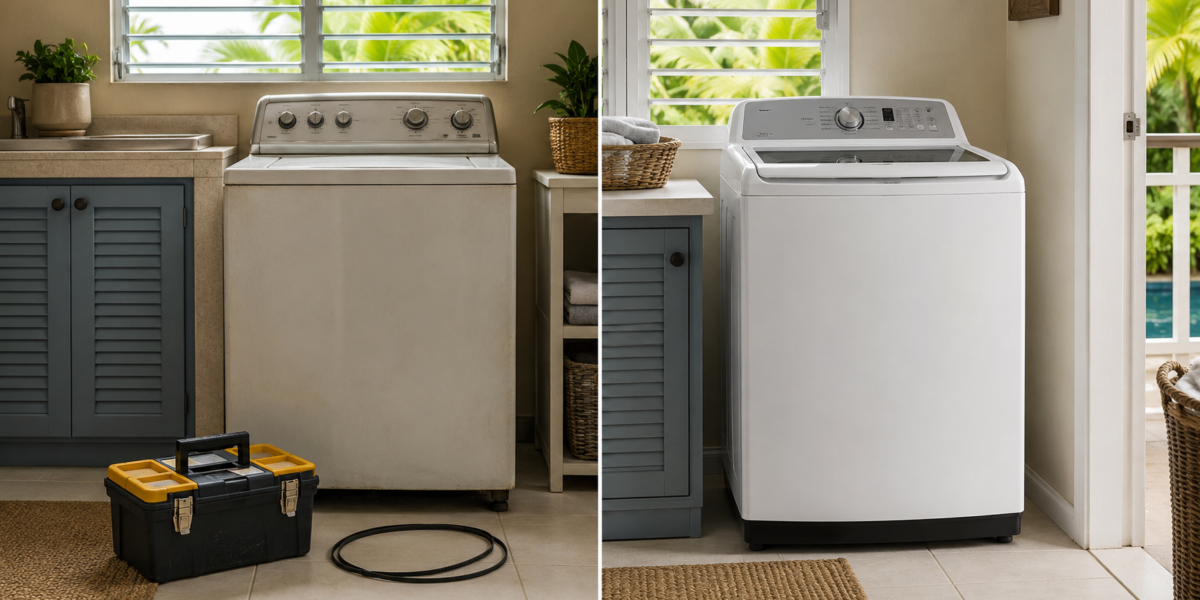
A broken appliance has excellent timing. It usually stops working when you have laundry, groceries, or hungry people waiting. Your refrigerator may suddenly become warm. Your washing machine might start dancing across the floor like it heard dancehall music.
You may then face one important question. Should you repair the appliance, or should you replace it completely? The answer depends on its age, condition, repair cost, energy use, and available replacement parts. Your household needs and budget also matter. Some problems need a simple, affordable fix. Others warn you that the appliance has reached the end of its useful life.
You do not need to make the decision alone. Professional appliance repair in Jamaica can identify the problem and clarify your options.
Start With the Signs Your Appliance Gives You
Appliances often provide warning signs before they stop completely. You might notice strange sounds, weak performance, leaks, or unusual smells. Your refrigerator may run constantly without keeping food cold. Your washing machine may finish each cycle with clothes still soaking wet.
An oven may heat unevenly or take longer than usual. Your air conditioner might blow air without making the room comfortable. These changes do not always mean you need a replacement. A worn belt, blocked filter, or faulty switch may cause the problem.
Pay attention to when the issue began. Think about whether it appeared suddenly or became worse gradually. Write down any unusual sounds or error codes. This information can help an appliance technician understand the likely cause.
Take a picture of the model number and manufacturer label. The technician may need these details when checking replacement parts. You should also record any recent electrical problems. Power changes can affect sensitive appliance components.
Do not continue using an appliance that produces smoke, sparks, or burning smells. Disconnect it only when you can do so safely. Keep everyone away from the appliance until an expert examines it. Continuing to use damaged equipment can increase the danger.
Check the Simple Things First
Before planning a farewell ceremony for your appliance, check a few basic things. The solution may be surprisingly simple. Make sure the appliance is connected properly. A loose plug can make reliable equipment appear completely lifeless.
Check whether the outlet works with another safe device. Stop immediately if you notice heat, sparks, or discolouration. Check whether a breaker has tripped, but do not reset it repeatedly. Stop and contact an expert if it trips again.
Check the appliance settings as well. Someone may have changed the temperature, timer, cycle, or safety lock. A blocked filter can reduce performance. Refrigerators, air conditioners, dryers, and other appliances may depend on regular filter cleaning.
Inspect visible hoses for bends or leaks. Water may not flow correctly when a hose becomes twisted or blocked. Avoid opening sealed panels or touching internal wiring. A quick internet video cannot replace training, tools, and proper safety procedures.
If the basic checks do not solve the issue, arrange professional appliance repair. Guessing can create extra damage and expense.
Consider the Appliance’s Age
Age plays an important role when you decide whether to repair or replace. Older appliances usually experience more wear. However, age alone should not make the decision. A well-maintained appliance may outlast a newer model with poor care.
Think about the appliance’s repair history. Has it worked reliably, or does it demand attention every few months? One affordable repair may be worthwhile. Several repairs within a short period can become an expensive pattern.
Older appliances may also have discontinued parts. Finding a suitable replacement component could take longer or cost more. Ask the technician whether the appliance remains generally sound. A good motor or compressor may justify replacing a smaller component. You should also consider how heavily your household uses the appliance. Daily use can influence wear and replacement priorities.
A rarely used appliance may remain practical after a small repair. An essential appliance needs dependable performance every day.
Compare Repair Costs With Replacement Costs
Repair cost is often the deciding factor. However, you should compare complete costs rather than looking at one price. Ask for an estimate covering diagnosis, labour, replacement parts, and transportation. These charges may vary by appliance and location.
Then research the price of a suitable replacement. Remember to include delivery, installation, removal, and any required accessories. A cheaper appliance may lack the features, size, or durability you need. Compare similar models for a fair decision.
You should also consider whether the repair includes a warranty. A warranty can make the repair feel less risky. If the repair costs almost as much as replacement, buying new may make sense. This becomes more likely for older equipment.
However, an expensive appliance might still deserve repair. A small component can fail while the main system remains in excellent condition. Do not approve major work without understanding the diagnosis. Ask which part failed and why replacement is recommended. An honest expert should explain the options in easy language. You should feel informed, not pressured or confused.
Do not rely on one percentage rule for every appliance. Consider age, safety, reliability, parts, warranties, and total ownership costs together.
When Repairing Usually Makes Sense
Repair may be the better choice when the appliance is fairly new. It may also have useful warranty coverage. A repair can make sense when the problem involves a common replaceable part. Switches, belts, seals, sensors, and hoses may qualify. You should consider repair when the appliance previously worked well. One unexpected failure does not always signal continuing trouble.
Repairing can also preserve an appliance that fits your space perfectly. Replacing built-in equipment may require cabinet or counter changes. You may prefer repair when a matching appliance is difficult to find. Nobody wants one lonely stainless-steel appliance judging the others.
A technician may also recommend repair when parts remain available. Quick access to parts can reduce both cost and waiting time. Repair can create less waste than immediate replacement. Keeping usable equipment working prevents it from reaching disposal sites too early.
The final decision should still match your budget. A sensible repair should restore reliable performance without creating repeated expenses.
When Replacement May Be the Smarter Choice
Replacement may be better when the appliance breaks frequently. Repeated service calls can quickly exceed its practical value. You should also consider replacement when important parts are unavailable. Custom modifications may be costly and unreliable.
Serious rust or physical damage can weaken the appliance. Cosmetic problems may also hide moisture or structural deterioration. A replacement may make sense when the appliance no longer meets your needs. Your household may require more space or capacity.
Older appliances can sometimes use more electricity or water. A more efficient model could reduce ongoing household expenses. However, do not replace equipment based on advertising claims alone. Compare actual features, energy information, warranty coverage, and purchase costs.
Safety concerns can also justify replacement. Damaged insulation, repeated overheating, or compromised wiring should receive professional assessment. An expert may determine that repair cannot restore safe operation. In that situation, replacement protects your home and household.
Think About Replacement Parts in Jamaica
Parts availability can strongly influence appliance repair in Jamaica. Some popular brands have easier local support than others. Imported parts may require extra time to arrive. Shipping costs and customs charges can also affect the final price.
Ask whether the technician can source the correct original part. If not, ask about compatible alternatives and their reliability. Avoid accepting an unknown component without an explanation. You should understand its brand, purpose, expected performance, and warranty.
Model numbers are especially important when sourcing parts. Two similar appliances may use completely different internal components. Take a clear photograph of the appliance label. Share it before the visit if the technician requests it.
You can also ask whether the part commonly fails. A repeated design problem may influence your repair decision. When a suitable part is readily available, repair becomes more convenient. Long delays may make replacement more practical for essential appliances.
Do Not Forget Energy and Water Use
The purchase price is only one part of appliance ownership. Electricity and water costs continue throughout the appliance’s life. An older refrigerator may run longer to maintain its temperature. A struggling air conditioner may work harder without cooling effectively.
Washing machines and dishwashers also vary in water use. Newer features may provide better control over smaller loads. Compare available efficiency information before buying a replacement. Choose a model that matches your real household habits.
A larger appliance does not automatically offer better value. Extra capacity can increase purchase costs and energy use. You should balance efficiency savings against the replacement price. Small monthly savings may take years to recover a large purchase cost.
Repairs can sometimes restore efficient operation. Cleaning components or replacing a faulty sensor may reduce unnecessary energy use. Ask the technician whether the fault affects consumption. That answer can help you compare repair and replacement more accurately.
Safety Should Always Lead the Decision
Convenience matters, but safety matters more. Stop using an appliance that shocks, sparks, smokes, leaks, or smells burnt. Do not touch a wet appliance while it remains connected. Water and electricity can create a serious hazard.
Keep children and pets away from damaged equipment. Curious hands and paws can make a bad situation worse. Never bypass a safety switch or protective component. That shortcut can expose your household to fire, shock, or injury.
Gas appliances require additional caution. If you smell gas, leave the area immediately and keep other people away. Do not operate switches, unplug equipment, light flames, or attempt repairs. Contact emergency assistance or your gas supplier from a safe location.
An appliance technician should inspect safety concerns before further use. The equipment should remain disconnected until professional guidance says otherwise. Home repairs should improve your living space. They should never place your safety at unnecessary risk.
Choosing an Appliance Repair Expert
The right technician should understand your appliance type and brand. Ask about relevant experience before scheduling the service. Describe the symptoms clearly. Mention noises, leaks, error codes, odours, performance changes, and previous repairs.
Ask whether there is a diagnostic fee. You should also confirm whether that charge contributes toward the final repair cost. Request an estimate before approving major work. The estimate should include labour, parts, transportation, and other expected charges.
You can ask whether the repair carries a warranty. Confirm which parts and services the warranty covers. Searching for home repair services in Jamaica may provide many choices. Focus on technicians with experience repairing your appliance type and brand.
ConnectToPros.com can help you explore appliance repair professionals and other service providers across Jamaica. You can compare suitable options before choosing. A professional diagnosis provides useful information, even when replacement becomes the final decision. You will understand why the appliance failed.
Prepare for the Technician’s Visit
Clear the area around the broken appliance. The technician needs enough space to inspect and access important components. Remove food, clothing, dishes, or other contents when appropriate. Store perishable items safely if your refrigerator has stopped cooling.
Keep your purchase receipt and warranty information nearby. The appliance may still qualify for manufacturer or retailer support. Share the model number, repair history, and error codes. These details may help the technician prepare before arriving.
Explain any troubleshooting you already attempted. This prevents repeated steps and reveals whether the problem changed afterward. Ask questions during the diagnosis. You should understand the fault, recommended repair, expected cost, and likely completion time.
Do not feel pressured into an immediate decision. Take time to compare the repair estimate with replacement costs.
Make the Choice That Works for You
There is no single answer for every broken appliance. The right choice depends on reliability, safety, cost, and household needs. Repair may save money and extend useful life. Replacement may provide better dependability, efficiency, or warranty protection. Start with simple checks, but respect the limits of do-it-yourself work. Internal appliance repairs usually require proper training and equipment.
Let an expert diagnose the problem before you abandon a valuable appliance. You may discover that one small part caused the drama. When you need a professional diagnosis, explore appliance repair experts on ConnectToPros.com and compare providers serving communities across Jamaica.
Your appliance might need a small repair or a respectful retirement. Either way, good information helps you choose confidently.